
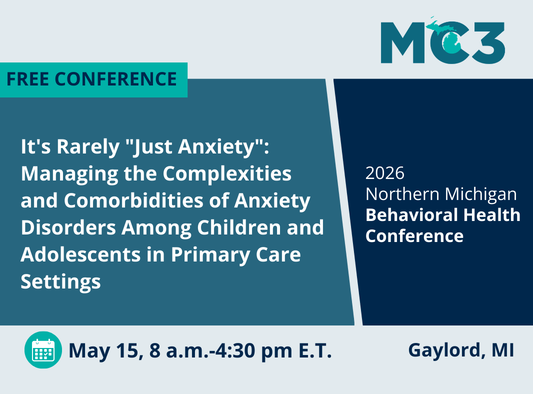




Announcement
No Comments |
Alyssa Wealty |
- Jan 26, 2026
A five-part series featuring clinical experts addressing youth suicide prevention
Screening and assessing suicide risk is a core component of prevention. As a primary care provider, your long-term patient relationships offer unique opportunities to identify these risks. Our new Youth Suicide Prevention Video Series provides practical guidance on the process, scripted “patient” appointments with examples of how to have these conversations, and information for emergency department and hospital settings.
Recorded Education Series
No Comments |
Kara Kucinski |
- Jan 26, 2026
Recorded modules
Beyond Testing Referrals: Strategies to Support Families in Getting Connected to the Best Testing Resource
Recorded 1-21-26
Video length: 41 minutes
Learning objectives:
- Identify key differences between neuropsychological testing, psychoeducational testing, and diagnostic/clinical evaluations
- Understand best practices for referrals based on presenting problem (i.e., possible neurodevelopmental disorder or learning disability)
- Define common psychiatric conditions that might mimic ADHD and identify how (and to whom) to refer for further evaluation
Presenter

Jessica Riggs, Ph.D.
Clinical Assistant Professor,
Department of Psychiatry,
Michigan Medicine
Related education modules
Anxiety
Pediatric Psychopharmacology: Safe & Effective Medication Treatment for Anxiety and Depression (43 minutes)
Watch
September 22, 2026
Autism Spectrum Disorder
September 22, 2026
Autism Spectrum Disorder
August 26, 2026
Autism Spectrum Disorder
August 12, 2026
Monthly Webinar
No Comments |
Kara Kucinski |
- Jan 21, 2026
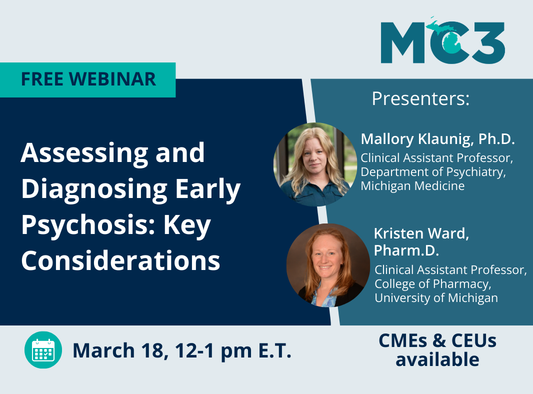
BEHAVIORAL HEALTH MONTHLY WEBINAR SERIES
Assessing and Diagnosing Early Psychosis: Key Considerations
Web-based virtual training | There is no fee to attend this activity | CMEs & CEUs available
March
18
12–1 p.m. ET
Learning objectives
- List diagnostic criteria for the early stages of psychosis spectrum disorders
- Describe key considerations in differentiating psychosis spectrum and other disorders
- Identify one tool used to screen for early psychosis spectrum disorders
Target audience
- Michigan health care providers, including those working in the following settings: Pediatrics, Family Medicine, Pediatric Subspecialties, School-Based Health Centers, and Psychiatry
- Michigan school-based mental health professionals and school nurses
Accessibility
Please let us know how we can ensure that this event is inclusive for you. We will have the Live Auto Transcript enabled for this training. If you have other accommodations or access needs that we can help facilitate, please contact the MC3 Program Team at [email protected], preferably at least one week in advance.
Register for webinar
Complete the form below to register for this webinar.


Presenters
Mallory Klaunig, Ph.D.
Clinical Assistant Professor,
Department of Psychiatry,
Michigan Medicine
Kristen Ward, Pharm.D.
Clinical Assistant Professor,
College of Pharmacy,
University of Michigan
Financial disclosure information
There are no relevant financial relationships with ACCME-defined commercial interests to disclose for this activity.
Accreditation and designation
This activity has been planned and implemented in accordance with the accreditation requirements and policies of the Accreditation Council for Continuing Medical Education (ACCME) through the joint providership of the Minnesota Medical Association and Michigan Public Health Institute. The Minnesota Medical Association (MMA) is accredited by the Accreditation Council for Continuing Medical Education to provide continuing medical education for physicians.
The Minnesota Medical Association designates this internet live activity for a maximum of 9 AMA PRA Category 1 Credit(s)™. Physicians should claim only the credit commensurate with the extent of their participation in the activity.

Social Work CEUs
Social workers can receive CEU credits for attending this training. Details about claiming CEU credits can be found here: MC3 Monthly Webinar Series CEU Credit Information
Sign up for MC3 educational opportunities emails
All prescribers who’ve signed up for MC3’s prescriber consultations and professionals from ISDs participating in MC3 are regularly sent emails with updates about our educational opportunities.
If you are not eligible for MC3’s prescriber consultations or a professional from an ISD participating in MC3 consultation but would like the receive information about learning opportunities, please complete this form: MC3 Educational Opportunities email list sign-up
Exclude From Search
No Comments |
Kara Kucinski |
- Jan 14, 2026

Clinical Pearls FAQs
No Comments |
Kara Kucinski |
- Jan 14, 2026
Acute Anxiety Management
Clinical Pearls FAQs
What are the common treatment options for acute anxiety?
Between 2002 and 2007, the landmark Child/Adolescent Multimodal Study (CAMS) compared four treatment arms in the management of pediatric anxiety:
- Care as usual
- Cognitive-Behavioral Therapy (CBT) alone
- SSRIs alone
- CBT with SSRIs
The study found that at 12 weeks, 50-60% of participants in both the CBT and the SSRI groups showed significant improvement in anxiety symptoms, with no statistically significant difference between the two arms; the CBT arm showed slightly more improvement than the SSRI arm alone. Moreover, the study found that 80% of children treated with a combination of both CBT and SSRIs showed improvement in anxiety symptoms (27). Although this study guides management of anxiety in youth, it does not necessarily address acute anxiolysis. Current recommendations for long term anxiety management do include combination treatment using SSRI’s plus CBT.
Below, we review different pharmacologic options for acute anxiety management:
Hydroxyzine (Atarax)
A 1st generation antihistamine (21) that is FDA approved for short-term symptomatic management of acute anxiety in pediatric populations (3). This drug takes effect within 15-30 minutes of oral intake, with the anxiolytic effects lasting for 4-6 hours (3). Hydroxyzine carries no addictive potential (3). Dosing for youth older than 6 ranges from 12.5 to 25 mg up to 4 times daily (7). However, doses as much as 50 mg may sometimes be needed in youth with an adult habitus. Hydroxyzine is often well-tolerated with a limited side effect profile. The most common side effect is sedation, which sometimes can be helpful in youth who have sleep difficulties. Less common side effects include QT prolongation at doses greater than 50 mg, as well as dry mouth and increased appetite with sustained use (20).
Propranolol
A non-selective beta blocker used off-label for situational anxiety (i.e., performance anxiety, dental phobia, etc…) in adults and adolescents (23-26). There is limited evidence for propranolol in pediatric anxiety (18; 22; 24-25). For adolescents, the initial dose is often 10 mg and titrated to effect up to 20 mg per dose. Total daily dose can range from 10 mgto as high as 40 mg, and doses can be divided up to 2-3 times per day (20). Common side effects include dizziness, fatigue, bradycardia, and hypotension. Initial vital signs, a personal cardiac history, and family cardiac history should be obtained prior to starting and monitored longitudinally. If there are any concerns of cardiac history, family cardiac history, or abnormal heart rate or blood pressure prior to initiation, consultation with Pediatric Cardiology should be sought. Use of propranolol is contraindicated in asthma, sick sinus syndrome, >1st degree heart block, and sinus bradycardia (20). Caution should be taken in the use of beta blockers with youth experiencing concurrent depressive symptoms, as beta blocker use may worsen depression.
Benzodiazepine
A class of medications that binds to GABA receptors in the central nervous system, leading to inhibition of neuronal activity (5). Although research in pediatric populations is limited, existing data suggest benzodiazepines are effective acute anxiolytics in youth and are generally well-tolerated (14). Due to the potential for dependence and withdrawal as a schedule IV controlled substance, the American Academy of Child & Adolescent Psychiatrists recommends short-term (<2 weeks) benzodiazepine use in limited circumstances with close monitoring (1). Benzodiazepines should be reserved for more severe cases of anxiety where psychotherapy and other pharmacologic management have been limited in promoting functioning, or the severity warrants a brief bridge of benzodiazepine for anxiolysis until more sustained therapies and pharmacologic treatments are able to take effect. Additionally, rare use prior to a highly anxiety-provoking activity can be considered when other non-pharmacologic and pharmacologic strategies have been limited in addressing acute anxiety (e.g. prior to procedure or diagnostic study, such as MRI).
Benzodiazepines can have short, moderate, or long-acting half-lives. Avoid benzodiazepines with short-half lives, like alprazolam, that have an increased risk of dependence. Consider moderate to longer acting benzodiazepines, like lorazepam, clonazepam, and diazepam, when needed. Short-term use of lorazepam in adolescents involves starting at doses of 0.25 mg 2-3 times daily, titrating to a dosing range of 0.02 mg/kg/dose to 0.1 mg/kg/dose with a maximum dose of 2 mg per dose (9; 13). However, caution should be taken with the dosing, frequency, and duration of use of lorazepam. If you consider dosing of other benzodiazepines or have questions about considering a benzodiazepine, please contact MC3 for further guidance. The most common side effects of benzodiazepine use are sedation and fatigue. Less common side effects include weakness, respiratory depression, paradoxical agitation, and disinhibition (16; 2).
Gabapentinoids
Gabapentinoids, like gabapentin and pregabalin, are GABA analogs that cause inhibition of neuronal activity (6). A number of studies suggest that gabapentin may be helpful for anxiety in adults (4; 10; 15; 17). Little to no data exists for youth with notable risk with the use of this medication class. Patients can develop dependence and withdrawal (6), and long-term daily use in adults may increase the risks of cognitive impairment and dementia later in life (8; 11; 12; 19). Gabapentinoids are also classified as a Schedule V controlled substance in some states. Use of this medication class should be limited in youth, unless there is another indication for use (such as neuropathic pain) with comorbid anxiety. Common side effects include drowsiness, dizziness, fatigue, respiratory depression, and weight gain (6). There also may be an indication for gabapentin in adolescents with anxiety and co-occurring substance use disorders, although close monitoring is required in this population and gabapentin would serve as an adjunctive therapeutic. If there are questions about gabapentinoids, please feel free to contact MC3 for further guidance.
Abrams G, Malas N. Acute Anxiety Management. Michigan Clinical Consultation & Care. January 14, 2026. https://mc3michigan.org/clinical-pearls-faqs-acute-anxiety-management/.
References:
- American Academy of Child and Adolescent Psychiatry. Anxiety Disorders: Parents’ Medication Guide. 2020.
- American Academy of Pediatrics. Benzodiazepines: Pediatric Medication. 2023. https://publications.aap.org/pediatriccare/article/doi/10.1542/pcc_peds.2023-1234/
- Atarax (Hydroxyzine hydrochloride). Package insert. Pfizer; 2006.
- Baldwin DS, Ajel K, Masdrakis VG, Nowak M, Rafiq R. Pregabalin for the treatment of generalized anxiety disorder: an update. Neuropsychiatr Dis Treat. 2013;9:883-892. doi:10.2147/NDT.S36453
- Bounds CG, Patel P. Benzodiazepines. [Updated 2024 Jan 30]. In: StatPearls [Internet]. Treasure Island (FL): StatPearls Publishing; 2025 Jan-. Available from: https://www.ncbi.nlm.nih.gov/books/NBK470159/
- Chincholkar M. Gabapentinoids: pharmacokinetics, pharmacodynamics and considerations for clinical practice. Br J Pain. 2020;14(2):104-114. doi:10.1177/2049463720912496
- DeMaso DR, Walter HJ. Psychopharmacology. In: Kliegman RM, St. Geme J, eds. Nelson Textbook of Pediatrics. 21st ed. Elsevier; 2020:chap. 33.
- Eghrari NB, Yazji IH, Yavari B, Van Acker GM, Kim CH. Risk of dementia following gabapentin prescription in chronic low back pain patients. Reg Anesth Pain Med. Published online July 10, 2025. doi:10.1136/rapm-2025-106577
- Gal P, Reed M. Medications. In: Kliegman RM, Behrman RE, Jenson HB, et al, eds. Nelson Textbook of Pediatrics. 18th ed. Philadelphia, PA: Saunders Elsevier; 2007: 2955-2999
- Hong JSW, Atkinson LZ, Al-Juffali N, et al. Gabapentin and pregabalin in bipolar disorder, anxiety states, and insomnia: Systematic review, meta-analysis, and rationale. Mol Psychiatry. 2022;27(3):1339-1349. doi:10.1038/s41380-021-01386-6
- Horowitz MA, Kelleher M, Taylor D. Should gabapentinoids be prescribed long-term for anxiety and other mental health conditions?. Addict Behav. 2021;119:106943. doi:10.1016/j.addbeh.2021.106943
- Huang YH, Pan MH, Yang HI. The association between Gabapentin or Pregabalin use and the risk of dementia: an analysis of the National Health Insurance Research Database in Taiwan. Front Pharmacol. 2023;14:1128601. Published 2023 May 30. doi:10.3389/fphar.2023.1128601
- Kliegman RM, Stanton BF, St. Gemell JW, et al, eds. Nelson Textbook of Pediatrics. 19th ed. Saunders Elsevier; 2011.
- Kuang H, Johnson JA, Mulqueen JM, Bloch MH. The efficacy of benzodiazepines as acute anxiolytics in children: A meta-analysis. Depress Anxiety. 2017;34(10):888-896. doi:10.1002/da.22643
- Lavigne JE, Heckler C, Mathews JL, et al. A randomized, controlled, double-blinded clinical trial of gabapentin 300 versus 900 mg versus placebo for anxiety symptoms in breast cancer survivors. Breast Cancer Res Treat. 2012;136(2):479-486. doi:10.1007/s10549-012-2251-x
- Mancuso CE, Tanzi MG, Gabay M. Paradoxical reactions to benzodiazepines: literature review and treatment options. Pharmacotherapy. 2004;24(9):1177-1185. doi:10.1592/phco.24.13.1177.38089
- Markota M, Morgan RJ. Treatment of Generalized Anxiety Disorder with Gabapentin. Case Rep Psychiatry. 2017;2017:6045017. doi:10.1155/2017/6045017
- Nugent NR, Christopher NC, Crow JP, Browne L, Ostrowski S, Delahanty DL. The efficacy of early propranolol administration at reducing PTSD symptoms in pediatric injury patients: a pilot study. J Trauma Stress. 2010;23(2):282-287. doi:10.1002/jts.20517
- Oh G, Moga DC, Fardo DW, Abner EL. The association of gabapentin initiation and neurocognitive changes in older adults with normal cognition. Front Pharmacol. 2022;13:910719. Published 2022 Nov 25. doi:10.3389/fphar.2022.910719
- Patel DR, Feucht C, Brown K, Ramsay J. Pharmacological treatment of anxiety disorders in children and adolescents: a review for practitioners. Transl Pediatr. 2018;7(1):23-35. doi:10.21037/tp.2017.08.05
- PubChem. Hydroxyzine. PubChem Compound Database. https://pubchem.ncbi.nlm.nih.gov/compound/Hydroxyzine
- Rosenberg L, Rosenberg M, Sharp S, et al. Does Acute Propranolol Treatment Prevent Posttraumatic Stress Disorder, Anxiety, and Depression in Children with Burns?. J Child Adolesc Psychopharmacol. 2018;28(2):117-123. doi:10.1089/cap.2017.0073
- Steenen SA, Su N, van Westrhenen R, et al. Perioperative Propranolol Against Dental Anxiety: A Randomized Controlled Trial. Front Psychiatry. 2022;13:842353. Published 2022 Feb 21. doi:10.3389/fpsyt.2022.842353
- Steenen SA, van Wijk AJ, van der Heijden GJ, van Westrhenen R, de Lange J, de Jongh A. Propranolol for the treatment of anxiety disorders: Systematic review and meta-analysis. J Psychopharmacol. 2016;30(2):128-139. doi:10.1177/0269881115612236
- Szeleszczuk Ł, Frączkowski D. Propranolol versus Other Selected Drugs in the Treatment of Various Types of Anxiety or Stress, with Particular Reference to Stage Fright and Post-Traumatic Stress Disorder. Int J Mol Sci. 2022;23(17):10099. Published 2022 Sep 3. doi:10.3390/ijms231710099
- Turner P. Clinical psychopharmacology of beta-adrenoceptor antagonism in treatment of anxiety. Ann Acad Med Singap. 1991;20(1):43-45.
- Walkup JT, Albano AM, Piacentini J, Birmaher B, Compton SN, Sherrill JT, et al. Cognitive Behavioral Therapy, Sertraline, or a Combination in Childhood Anxiety. N Engl J Med. 2008;359(26):2753-2766.
Clinical Pearls FAQs
No Comments |
Kara Kucinski |
- Jan 14, 2026
Obsessive Compulsive Disorder (OCD)
Clinical Pearls FAQs
How do I recognize and manage OCD?
OCD usually starts in two age groups: youth ages 7-12 and adolescents. However, OCD can occur across the lifespan and is common in children and adolescents. It is estimated that OCD affects around 0.5% of children and adolescents [2]. OCD is characterized by obsessions and/or compulsions that cause severe discomfort and interfere with functioning.
The criteria for diagnosis of OCD are as follows:
- Presence of obsessions, compulsions, or both:
- Obsessions
- Recurrent and persistent thoughts that are intrusive and unwanted that cause individuals anxiety or distress
- The individual attempts to ignore, neutralize, or suppress these thoughts with some other thought or action
- Compulsions
- Repetitive behaviors or mental acts the individual feels driven to perform
- Behaviors/acts are aimed at preventing/reducing anxiety or a dreaded event or situation
- Behaviors/acts are not connected in a realistic way or are clearly excessive
- Obsessions are time consuming (more than 1 hour/day) or cause clinically significant distress/impairment in social, occupational, or other important areas of functioning
- Obsessions
Some common themes of obsessions include but are not limited to:
- Contamination (fear/preoccupation with dirt, germs, illness)
- Harm (fear/preoccupation that something bad will happen to oneself or a loved one)
- Aggression/violence (thought/impulse to harm oneself or someone else)
- Recurrent doubt (fear/preoccupation on whether a task was completed correctly, e.g., “did I lock the door?”)
- Order (a need for things to be “just right” or arranged specifically, need for symmetry)
- Superstition (belief that certain actions/numbers can prevent bad events)
- Taboo or aggressive thoughts (fear/preoccupation of intrusive sexual or blasphemous thoughts, harming oneself, violent themes)
- Somatic (fear/preoccupation with internal bodily sensations, diet/weight, and/or health)
[3; 7; 10; 12]
Some common compulsive behaviors include but are not limited to:
- Washing/cleaning (excessive cleaning, bathing, and/or handwashing, not realistically connected to illness prevention)
- Checking (excessive checking of locks, homework, oven, body, light switches, etc., relieves anxiety or prevents feared event)
- Counting or repeating actions (repeatedly counting objects, performing actions, or reciting thoughts a specific number of times)
- Symmetry (excessive ordering/arranging objects until they are “just right”)
- Thought neutralization/reassurance (excessive confession of taboo thoughts, praying, repeating phrases or numbers, mental reviewing, or asking for reassurance to neutralize distressing thoughts or prevent something bad from happening)
[5; 7; 12; 15]
How is OCD commonly diagnosed and treated?
There are a few scales you can use as part of assessment, but in and of themselves are not completely diagnostic. In children, you can administer the CY-BOCS Checklist (Children’s Yale-Brown Obsessive Compulsive Scale) to ascertain current and past symptoms. You can use serial CY-BOCS severity rating scales to monitor patient progress [13]. For older adolescents and adults, you can administer the DOCS Dimensional Obsessive-Compulsive Scale. A total score >21 has about 70% sensitivity and 70% specificity in distinguishing OCD from other anxiety disorders [1].
Cognitive Behavioral Therapy (CBT) remains the first line treatment for OCD, specifically Exposure and Response Prevention (ERP). ERP systematically desensitizes the person by exposing them to situations that generate anxiety in a safe setting while preventing the patient from performing compulsions [14; 16]. For initial treatment of OCD, the efficacy in symptom reduction is equivalent between ERP and ERP+SSRI. ERP has been shown to be superior to SSRI monotherapy [14].
If CBT with ERP is ineffective or only partially effective after 13-20 sessions, or symptoms are particularly disabling, an SSRI can be added [11; 14]. Sertraline is approved for children 6 and older [18]. Fluoxetine and fluvoxamine are approved for children 8 and older [16; 17]. Paroxetine is approved for OCD in adults but not in children and should not be used in the pediatric populations [9]. Paroxetine typically should not be prescribed for youth under age 18 due to safety concerns surfaced by the FDA, American Academy of Child and Adolescent Psychiatry and other regulatory bodies relating to this medication being more activating, and having some potential for dependence and withdrawal with use. An adequate trial of SSRI is typically 8-12 weeks, of which 4-6 weeks should be at the maximum tolerable dose, before declaring treatment non-response. For the management of OCD with SSRIs, often doses at the higher end of the therapeutic range is needed to observe significant symptomatic relief and treatment response.
Additionally, thoughtful psychoeducation and counseling play an important role in treating children and adolescents with OCD. Intrusive thoughts/obsessions in OCD are ego-dystonic, meaning that they do not align with the patient’s true feelings and values [4; 8]. It is this clash between a patient’s true feelings/opinions and these intrusive thoughts that makes them so distressing. Explaining this to patients can help them to understand that these thoughts are not related to underlying desires or moral failures, which can provide a lot of comfort. Additionally, it is important to provide counseling to family members to ensure that they do not unintentionally reinforce compulsive behaviors by participating in rituals (such as providing excessive reassurance).
Abrams G, Malas N. Obsessive Compulsive Disorder. Michigan Clinical Consultation & Care. January 14, 2026. https://mc3michigan.org/clinical-pearls-faqs-obsessive-compulsive-disorder/.
References:
- Abramowitz JS, Deacon BJ, Olatunji BO, et al. Assessment of obsessive-compulsive symptom dimensions: development and evaluation of the Dimensional Obsessive-Compulsive Scale. Psychol Assess. 2010;22(1):180-198. doi:10.1037/a0018260
- American Academy of Child and Adolescent Psychiatry. Obsessive‑Compulsive Disorder in Children and Adolescents: Facts for Families Guide No 60. Updated October 2023. AACAP. Accessed August 3, 2025.
- American Psychiatric Association. Diagnostic and Statistical Manual of Mental Disorders. 5th ed. American Psychiatric Publishing; 2013:235-238.
- Audet JS, Bourguignon L, Aardema F. What makes an obsession? A systematic-review and meta-analysis on the specific characteristics of intrusive cognitions in OCD in comparison with other clinical and non-clinical populations. Clin Psychol Psychother. 2023 Nov-Dec;30(6):1446-1463. doi: 10.1002/cpp.2887. Epub 2023 Jul 22. PMID: 37482945.
- Barzilay R, Patrick A, Calkins ME, et al. Obsessive-Compulsive Symptomatology in Community Youth: Typical Development or a Red Flag for Psychopathology?. J Am Acad Child Adolesc Psychiatry. 2019;58(2):277-286.e4. doi:10.1016/j.jaac.2018.06.038
- Dougherty DD, Brennan BP, Stewart SE, Wilhelm S, Widge AS, Rauch SL. Neuroscientifically informed formulation and treatment planning for patients with obsessive-compulsive disorder: a review. JAMA Psychiatry. 2018 Oct 1;75(10):1081-1087. doi:10.1001/jamapsychiatry.2018.0930.
- García-Soriano G, Carrasco Á, Emerson LM. Obsessional intrusive thoughts in children: An interview based study. Psychol Psychother. 2023;96(1):249-262. doi:10.1111/papt.12437
- Grant JE. Obsessive-compulsive disorder. N Engl J Med. 2014 Aug 14;371(7):646-653. doi:10.1056/NEJMcp1402176.
- Geller DA, Wagner KD, Emslie G, et al. Paroxetine treatment in children and adolescents with obsessive-compulsive disorder: a randomized, multicenter, double-blind, placebo-controlled trial. J Am Acad Child Adolesc Psychiatry. 2004;43(11):1387-1396. doi:10.1097/01.chi.0000138356.29099.f1
- Ivarsson T, Valderhaug R. Symptom patterns in children and adolescents with obsessive-compulsive disorder (OCD). Behav Res Ther. 2006;44(8):1105-1116. doi:10.1016/j.brat.2005.08.008
- Kotapati VP, Khan AM, Dar S, Begum G, Bachu R, Adnan M, Zubair A, Ahmed RA. The Effectiveness of Selective Serotonin Reuptake Inhibitors for Treatment of Obsessive-Compulsive Disorder in Adolescents and Children: A Systematic Review and Meta-Analysis. Front Psychiatry. 2019 Aug 6;10:523. doi: 10.3389/fpsyt.2019.00523. PMID: 31447707; PMCID: PMC6691487.
- Porth R, Geller D. Atypical symptom presentations in children and adolescents with obsessive compulsive disorder. Compr Psychiatry. 2018;86:25-30. doi:10.1016/j.comppsych.2018.07.006
- Scahill L, Riddle MA, McSwiggin‑Hardin M, Ort SI, King RA, Goodman WK, Cicchetti D, Leckman JF. Children’s Yale‑Brown Obsessive Compulsive Scale: reliability and validity. J Am Acad Child Adolesc Psychiatry. 1997;36(6):844–852. doi:10.1097/00004583‑199706000‑00023
- Steele DW, Kanaan G, Caputo EL, Freeman JB, Brannan EH, Balk EM, Trikalinos TA, Adam GP. Treatment of Obsessive-Compulsive Disorder in Children and Youth: A Meta-Analysis. Pediatrics. 2024 Dec 6. doi: 10.1542/peds.2024-068992. Epub ahead of print. PMID: 39639456.
- Toro J, Cervera M, Osejo E, Salamero M. Obsessive-compulsive disorder in childhood and adolescence: a clinical study. J Child Psychol Psychiatry. 1992 Sep;33(6):1025-37. doi: 10.1111/j.1469-7610.1992.tb00923.x. PMID: 1400685.
- Uhre CF, Uhre VF, Lønfeldt NN, Pretzmann L, Vangkilde S, Plessen KJ, Gluud C, Jakobsen JC, Pagsberg AK. Systematic Review and Meta-Analysis: Cognitive-Behavioral Therapy for Obsessive-Compulsive Disorder in Children and Adolescents. J Am Acad Child Adolesc Psychiatry. 2020 Jan;59(1):64-77. doi: 10.1016/j.jaac.2019.08.480. Epub 2019 Oct 4. PMID: 31589909.
- U.S. National Library of Medicine. Fluoxetine [package insert]. DailyMed. Updated July 2023.
- U.S. National Library of Medicine. Fluvoxamine [package insert]. DailyMed. Updated July 2023.
- U.S. National Library of Medicine. Sertraline Hydrochloride [package insert]. DailyMed. Updated May 2023.
Announcement
No Comments |
Alyssa Wealty |
- Jan 12, 2026

Congratulations to Lia Gaggino on her retirement
We’d like to recognize Dr. Lia Gaggino, a tireless advocate for children’s mental health both within her roles at the American Academy of Pediatrics, nationally and statewide, as well as within MC3.
As we were developing MC3 in its early days, we had the good fortune of being connected with Lia after learning that she was the “go-to physician” for all things mental health on the west side of the state.
Lia has been a key partner of MC3 since the beginning, a tenacious advocate for children’s mental health and MC3 in Lansing, an expert presenter and facilitator for several Project ECHO® series, and instrumental in the development of MC3’s youth suicide prevention and safety planning quality improvement initiative, live trainings, and forthcoming video series.
She was also the developer and host of “Pediatric Meltdown,” a popular podcast that brought together experts on a wide range of pediatric mental health topics that ran from 2020 to 2025. The quality of the experts and Lia’s warm, conversational style make these a joy to listen to and learn from.
Recently, Lia developed the Building Better Workflows workbook, a detailed resource designed to equip pediatric primary care providers and clinic staff with the skills they need to identify and manage behavioral and mental health care for children in their practice.
Lia retired at the end of 2025, and we are forever indebted to her. She has been an instrumental part of MC3’s history. She is energetic, wise, and beloved by her colleagues throughout Michigan and the country.
Thank you, Lia, and enjoy a well-deserved retirement. We will gladly welcome you back for a guest appearance any time!
Sheila Marcus, M.D., Founder of MC3, and the MC3 Program Team
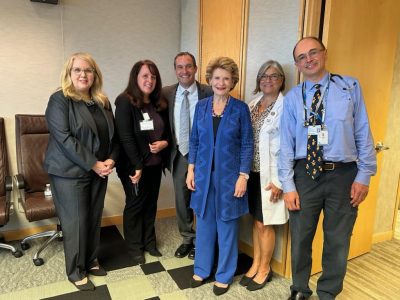
(L-R) Former HRSA Administrator Carole Johnson, MC3 Behavioral Health Consultant Mindy Evans, former MC3 psychiatrist Richard Dopp, M.D., former Senator Debbie Stabenow, MC3 champion Lia Gaggino, M.D., and pediatrician Yakov Sigal, M.D. at an event announcing new HRSA funding for MC3 in Lansing, Sep. 2023.

(L-R) Jessica Pierce, M.D., M.Sc., Sheila Marcus, M.D., Lia Gaggino, M.D., Cassandra Kotajarvi, LMSW, and Kristie Hechtman at the Upper Peninsula Health Care Solutions conference in Marquette, April 2025.

(L-R) Sheila Marcus, Anne Kramer, and Lia Gaggino at a gathering to celebrate Lia’s retirement in Ann Arbor, Jan. 2026.
Recorded Education Series
No Comments |
Kara Kucinski |
- Jan 5, 2026
Recorded modules
Tailored Prescribing for Perinatal Patients with Trauma
Recorded 12-17-25
Video length: 39 minutes
Learning objectives:
- Identify the types of trauma that birthing patients may experience and learn how to assess for a diagnosis of PTSD
- List common medications used to treat symptoms of PTSD and understand how to prescribe them
- Discuss the safety data for medications discussed, in both pregnancy and breastfeeding
Presenter

Samantha Shaw-Johnston, M.D.
Clinical Assistant Professor,
Department of Psychiatry,
Michigan Medicine
Related education modules


Anxiety
Empowering Survivors: Assessing and Caring for Perinatal Needs Related to Previous Trauma (45 minutes)
Watch
September 19, 2025
No Comments |