Start the conversation about mental health with your patients this Suicide Prevention Month. Browse MC3’s latest resources to support youth suicide prevention, including educational videos, screening tools, handouts for families, and more.
Results from a recent survey conducted by the American Academy of Pediatrics highlight the important role played by primary care pediatricians (PCPs) in diagnosing and treating mental health conditions among patients. The PCPs surveyed identified some of the main barriers to treatment they experience.
In terms of the role played by PCPs, key results included:
- 97% of PCPs agreed that identifying anxiety and depression is part of their professional responsibility
- Most also agreed that PCPs should be responsible for treatment, including prescribing medications (80%) and referring patients for additional care (96%)
- PCPs further reported screening for symptoms of anxiety (97%) and depression (99%) during visits
Primary care pediatricians may be the first line of intervention for pediatric mental health treatment, but they don’t have to do it alone. Across the country, psychiatry access programs like MC3 serve as a support and guide to PCPs, bolstering their ability to provide behavioral health care to patients. MC3 offers a wide range of resources and training to support providers’ management of pediatric mental health, including:
- Pediatric Resource Library with screening tools, family handouts, and treatment guidelines organized by mental health topic
- Clinical Pearls Video: Anxiety Evaluation & Management
- Video: Depression in Youth: Presentation, Diagnosis, Treatment
Despite the responsibility placed on PCPs, many reported experiencing substantial barriers to treating mental health conditions, including:
- Most PCPs agreed that lack of time (94%) and lack of behavioral health resources (90%) were barriers
- 75% agreed that lack of training in brief interventions, inadequate payment, and lack of training in prescribing medications were barriers
- Most PCPs agreed that long wait times to see a mental health provider (98%), lack of available providers (93%), and available providers not accepting Medicaid (86%) or any insurance (84%) were barriers to referring patients to further care
MC3 reduces these barriers to care and helps reduce the need for higher levels of care through no-cost psychiatric consultation and resources for providers, including:
- Outpatient prescriber consultations connect PCPs directly with child and adolescent psychiatrists who provide diagnostic clarity, medication recommendations, and resources for behavioral health support, including psychotherapy
- Pediatric Psychopharmacology Reference Card provides detailed psychopharmacological information specific to treating pediatric patients
- Billing & Coding Guide ensures prescribing providers are accurately recording their time spent on MC3 psychiatric consultations and other mental health services
Prescribing providers in Michigan can sign up for MC3 consultation or contact us for questions about program services at [email protected].
The Health Resources and Services Administration (HRSA) celebrated Mental Health Awareness Month this May by highlighting some of their services available to families.
This includes the new Moms.gov website, developed in partnership with the U.S. Department of Health and Human Services and the Office of the Assistant Secretary for Health. The website is designed to connect new and expecting mothers with trusted information and resources to support their wellbeing.
Additionally, HRSA recently celebrated the fourth anniversary of the National Maternal Mental Health Hotline, which offers free counseling support for pregnant and postpartum women by call, text, and chat. Since launching on Mother’s Day in 2022, the Hotline has supported more than 100,000 people.
Health care providers are encouraged to share these resources with patients, partners, and communities to further support the wellbeing of mothers and families.
Effective treatment of Autism Spectrum Disorder (ASD) begins with effective testing. However, when managing a patient with potential behavioral health needs, knowing where to send them for testing isn’t always straightforward.
Browse MC3’s latest resources to support the treatment of ASD, including recorded trainings, guidance for testing, and more, below.
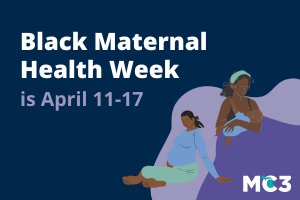
Black Maternal Health Week, a campaign founded by the Black Mamas Matter Alliance (BMMA) and now in its 10th year, is an opportunity to raise awareness, foster activism, and strengthen community. It amplifies the voices, perspectives, and lived experiences of Black mothers and birthing people and calls upon health care providers to reflect on the role they play in improving health outcomes for Black mothers.
There is still much room for improvement in Michigan and beyond, as evidenced by the following stats:
- The Black maternal mortality rate is 2.8x higher than their white counterparts
- The Black infant mortality rate is 2.1x higher than the state rate
- Access to postpartum care in Michigan is lower for Black mothers compared to their white counterparts
MC3 has gathered resources on how you can support your patients, including community resources to share directly with your patients.
Resources for providers
- Black Mamas Matter Alliance developed a Black Maternal Health Week Toolkit with data and resources for providers: LEARN MORE
- This collection of resources by the Detroit Health Equity Education Resource (D-HEER) promotes health equity in prenatal care: LEARN MORE
- These Anti-Racism Resources for Pediatricians gathered by Dr. Stephanie Fong Gomez, American Academy of Pediatrics 2020 grantee, provide pediatricians with anti-racism tools and education: LEARN MORE
- The Mother Infant Health and Equity Collaborative (MIHEC) quarterly meetings bring communities’ work together to address upstream inequities: LEARN MORE
Resources to share with patients
- MC3 Perinatal Patient Care offers free, same-day or next business day access to Behavioral Health Consultants who offer mental health screening, brief needs assessment, and personalized connections to community resources and support services for pregnant patients and new mothers. Pregnant patients and those within 12 months postpartum can receive services. Available only in Wayne, Oakland, Macomb, Ingham, or Washtenaw counties: LEARN MORE
- The Perinatal Patient Toolkit developed by Zero to Thrive and MC3 helps mothers build skills and find support when facing maternal mental health challenges during the perinatal period: LEARN MORE
- Michigan Medicaid now provides local doula care for pregnancy and childbirth: LEARN MORE
- The Maternal Infant Health Program in Michigan provides free support for families during pregnancy and infancy: LEARN MORE
- The Black Mothers’ Breastfeeding Association works to reduce racial disparities in breastfeeding support and success for Black families: LEARN MORE
- Birth Detroit offers many resources and programs for pregnant and postpartum families including childbirth education, postpartum support groups, and fatherhood support groups: LEARN MORE
- The WIN Network has free resources for pregnancy and motherhood in Detroit: LEARN MORE
Browse MC3’s latest resources for treating substance use in youth, including upcoming and recorded trainings, screening tools, and family handouts.
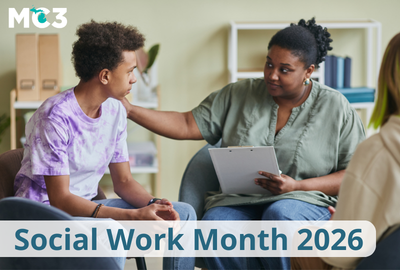
Social workers are often referred to as the “unsung heroes” of the health care industry. At MC3, where social workers are integral to the services and support we provide, we recognize how impactful social workers are to the world of health. This Social Work Month, we invite you to join us in celebrating how social workers Uplift, Defend, and Transform.
Uplift
Navigating health issues, whether mental, behavioral, or physical, can be incredibly challenging. Social workers try to make this process less challenging for patients by providing a compassionate presence, addressing any barriers to care, and advocating against inequities.
Defend
Social workers act as voices of the vulnerable. Whether it’s defending a patient from discrimination, identifying signs of abuse, or advocating for higher levels of care, they strive to ensure that all patients feel safe, heard, and empowered.
Transform
Social workers are often at the forefront of change in the health care industry. Their invaluable insight and advocacy contribute to policy-making, research, and quality improvement in health care systems, making them more patient-centered, equitable, and effective. They don’t just offer quick fixes, they reimagine the way health care functions so it can better serve all patients.
Social workers are not just “unsung heroes,” they are also the heart of health care. Their impact extends far beyond individual patient care, inspiring the entire health care system to be more inclusive and effective for all.
On behalf of everyone on the MC3 team, thank you to all social workers for devoting your lives to helping and empowering others!
The MC3 team shared highlights from the past year, including new services, expanded education, and updated resources, in the web-based 2025 Annual Report. View the full report below.
Families and children across the country, and now in the state of Michigan, have been heavily impacted by recent deportations.
To provide support to the families affected, we gathered several helpful resources below:
American Academy of Pediatrics: Immigrant Child Health
Healthychildren.org: Seeking Safe Haven: Supporting Immigrant Children & Families Facing Detention or Separation
No Comments |